 FreeSeoCheckers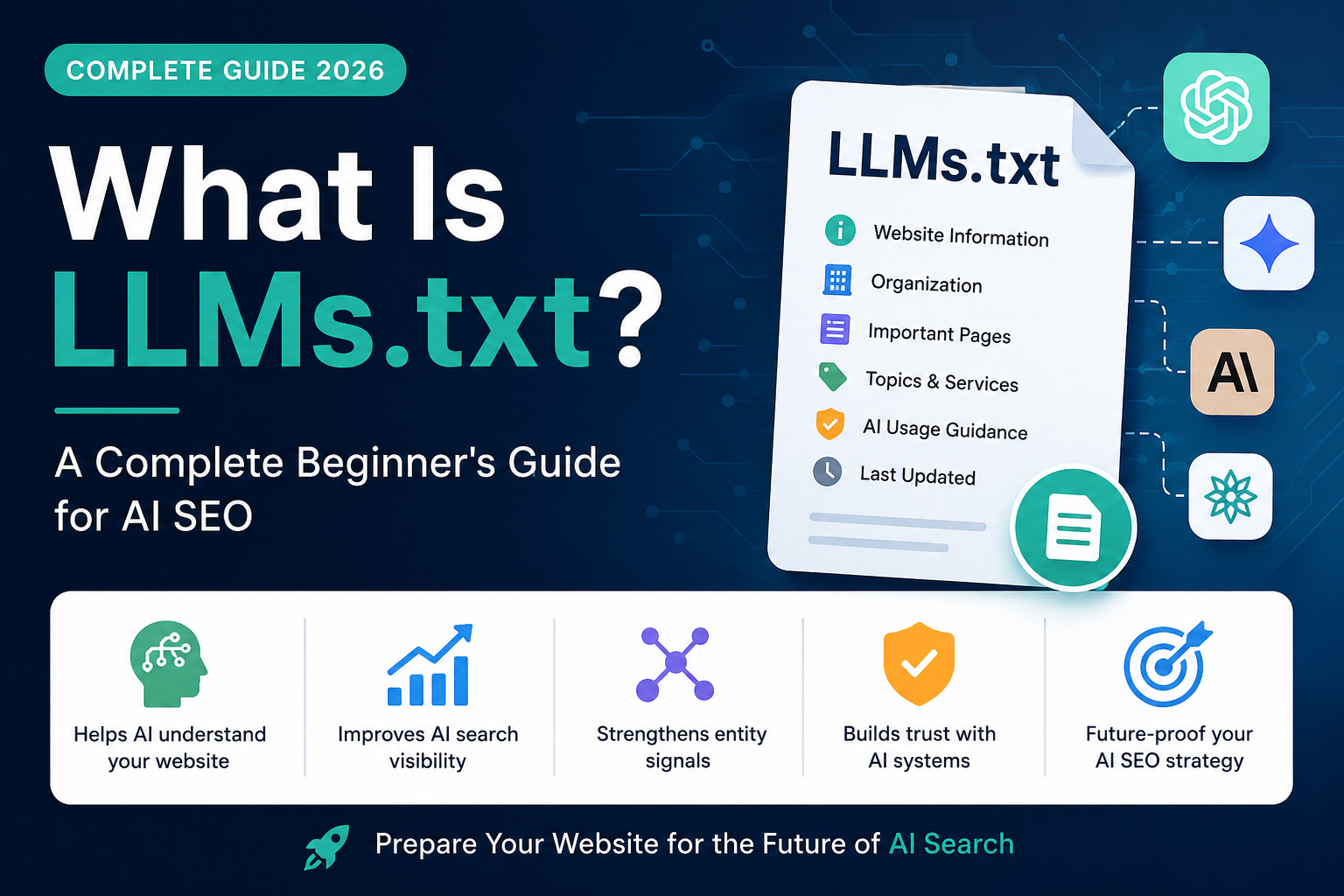
What Is LLMs.txt? Complete Guide for AI SEO and AI Search Optimization
Introduction
Artificial intelligence is changing the way people discover information online. For more than two decades, traditional search engines have been the primary gateway to websites, products and services. Today, millions of users are increasingly turning to AI-powered platforms such as OpenAI's ChatGPT, Anthropic's Claude, Google's AI-powered search experiences and other large language model platforms to find answers, compare products and conduct research.
This shift is creating a new discipline often referred to as AI SEO or Generative Engine Optimization (GEO). Instead of focusing solely on rankings in traditional search results, website owners are now looking for ways to help AI systems understand their websites more accurately. One of the newest concepts in this area is LLMs.txt.
LLMs.txt is an emerging website file designed to provide context to artificial intelligence systems. While traditional files such as robots.txt and sitemap.xml were created primarily for search engines and crawlers, LLMs.txt is intended to help large language models understand a website's purpose, structure and most important resources.
As AI-powered search continues to evolve, understanding how LLMs.txt works can help website owners prepare for the future of digital discovery.
What Is LLMs.txt?
LLMs.txt is a text-based file that can be placed in the root directory of a website. Its purpose is to provide structured information about the website for large language models and AI systems. Instead of forcing AI systems to infer everything from hundreds of pages, the file acts as a concise summary that explains what the website is about, who operates it and which resources are most important.
Think of it as a guidebook for artificial intelligence. When a human visitor lands on a website, they can usually determine within a few minutes whether the site sells products, publishes articles or provides software tools. AI systems must perform a similar task, but they often need to analyze large amounts of content before understanding the site's purpose.
An LLMs.txt file can simplify this process by providing direct context. For example, an SEO software company could use the file to explain that it offers website auditing tools, technical SEO resources and AI SEO solutions. A publisher could use it to identify major content categories and editorial resources. An e-commerce business could highlight product categories, support pages and company information.
For websites focused on AI search visibility, tools such as the LLMs.txt Generator and LLMs.txt Validator can simplify the creation and verification process.
Why LLMs.txt Matters in 2026
The internet is entering a period where AI-assisted discovery is becoming increasingly common. Users are asking AI systems complex questions that previously required multiple searches and website visits. As a result, AI platforms need reliable methods for understanding websites and identifying trustworthy information.
Traditional SEO remains important, but AI systems evaluate information differently. They attempt to understand entities, relationships, expertise, trust signals and topical authority. This means that website owners need to think beyond rankings and consider how machines interpret their content.
LLMs.txt matters because it contributes to machine understanding. It provides a structured overview that can reduce ambiguity and improve clarity. While there is currently no evidence that LLMs.txt is a direct Google ranking factor, it aligns with broader industry trends toward structured communication and AI-friendly website architecture.
Many SEO professionals already view LLMs.txt as part of a larger AI SEO strategy that also includes structured data from Schema.org, high-quality content, strong internal linking and entity optimization. When combined with tools such as the GEO Checker and AI Search Audit, website owners can gain a better understanding of how prepared their websites are for AI-powered search experiences.
How LLMs.txt Differs from Robots.txt
One of the most common misconceptions is that LLMs.txt replaces robots.txt. In reality, these files serve completely different purposes.
Robots.txt was created to provide instructions to crawlers. Website owners use it to specify which sections of a website can be accessed and which sections should be ignored. Search engines have relied on robots.txt for decades as part of the crawling process.
LLMs.txt, on the other hand, does not provide crawling instructions. Its purpose is contextual rather than technical. Instead of controlling access, it explains what the website contains and why it exists.
A useful analogy is to imagine a large office building. Robots.txt acts like a security guard directing visitors to authorized areas and restricting access to private rooms. LLMs.txt acts more like a receptionist who explains what the company does, introduces important departments and helps visitors understand where they can find useful information.
Because these files serve different functions, many websites will benefit from using both simultaneously. Robots.txt continues to support crawling behavior, while LLMs.txt focuses on communication and understanding.
How LLMs.txt Differs from Sitemap.xml
Another file frequently compared with LLMs.txt is sitemap.xml. While both files can help machines understand a website, they serve very different purposes.
A sitemap.xml file is primarily designed to help search engines discover URLs. It acts as a roadmap that lists pages, categories, products and other resources that website owners want search engines to crawl and index.
LLMs.txt focuses on context rather than discovery. Instead of listing every URL on a website, it highlights the most important resources and explains their purpose.
For example, a sitemap might contain thousands of URLs. An LLMs.txt file might only reference the homepage, important product pages, documentation resources and major content categories. This makes it easier for AI systems to identify the most valuable information without processing unnecessary details.
In many cases, the best approach is to use all three files together. Robots.txt helps manage crawling, sitemap.xml helps with discovery and LLMs.txt helps with understanding.
Benefits of Using LLMs.txt
One of the biggest advantages of LLMs.txt is clarity. AI systems are becoming increasingly sophisticated, but they still benefit from structured information. Providing a concise summary can help reduce confusion and improve understanding.
Another important benefit is stronger entity recognition. Modern AI systems often rely on entities rather than keywords alone. An entity can be a company, product, service, person or topic. By clearly defining these entities, websites may improve how AI systems interpret their content.
LLMs.txt can also help highlight important pages. Large websites often contain thousands of URLs, making it difficult to determine which resources are most valuable. A properly structured file can identify key pages and improve content discovery.
The file may also support broader AI SEO efforts. While it is not a ranking factor, it complements other optimization techniques such as schema markup, topical authority, internal linking and content quality.
As AI-powered search continues to evolve, providing structured context may become a standard best practice for websites seeking visibility in AI-generated answers.
Who Should Use LLMs.txt?
Although any website can implement LLMs.txt, some organizations may benefit more than others.
Software companies can use it to highlight products, features, documentation and support resources. Since software websites often contain extensive documentation, a structured summary can help AI systems identify important information quickly.
Publishers and bloggers can use the file to identify editorial categories, cornerstone content and authoritative resources. This may help AI systems understand the publication's focus and expertise.
E-commerce websites can highlight product categories, customer support resources and company information. This can make it easier for AI systems to understand what the business offers.
Marketing agencies, consultants and SEO professionals are also adopting LLMs.txt as part of broader AI SEO strategies. These organizations often publish educational content and benefit from clearer communication with AI systems.
Educational websites, non-profit organizations and local businesses can also use the file to improve contextual understanding and strengthen entity signals.
Best Practices for Creating LLMs.txt
The effectiveness of an LLMs.txt file depends on the quality of the information it contains. The goal is not to include every detail about a website but rather to provide a concise and accurate overview.
Start by describing the website clearly. Explain what the website does, who it serves and which topics it covers. Avoid vague descriptions that could apply to almost any website.
Include links to the most important pages rather than every page. Focus on resources that represent the website's expertise and authority.
Keep information updated. A file that references outdated products, services or content may reduce usefulness and create confusion.
Use simple language. The objective is clarity, not complexity. Clear descriptions are generally more helpful than technical jargon.
Website owners should also validate their files regularly. The LLMs.txt Validator can help identify missing sections and optimization opportunities.
Common Mistakes to Avoid
One common mistake is treating LLMs.txt as a keyword stuffing opportunity. The file should focus on clarity and context rather than excessive optimization.
Another mistake is including too much information. Some website owners attempt to list every page and category. This can reduce readability and make the file less useful.
Outdated information is another frequent issue. Websites evolve over time, and LLMs.txt should evolve as well. Whenever major changes occur, the file should be reviewed and updated.
Some website owners also forget to include important resources. The most valuable pages on a website should be clearly identified.
Finally, many organizations create a file but never validate it. Running the file through a validator can help ensure that it follows current best practices.
How to Create an LLMs.txt File
Creating an LLMs.txt file manually is possible, but automated tools can significantly simplify the process.
The easiest method is to use the LLMs.txt Generator available on FreeSEOCheckers. The tool can analyze a website, identify important pages and generate a structured file.
Once the file has been generated, it should be uploaded to the root directory of the website. This typically makes it accessible at:
example.com/llms.txt
After uploading the file, it should be tested to ensure that it is publicly accessible and properly formatted.
Website owners should also review the content manually to verify accuracy and ensure that important resources are included.
How to Validate an LLMs.txt File
Validation is an important step because even small mistakes can reduce the usefulness of the file.
The LLMs.txt Validator can analyze the structure of a file and identify potential issues. Validation helps ensure that important sections are present and that formatting follows recommended practices.
A validator may also provide recommendations for improving AI readability and GEO readiness. This can be especially useful for organizations that are new to AI SEO.
Validation should be performed whenever the file is updated to ensure continued accuracy and effectiveness.
LLMs.txt and Generative Engine Optimization (GEO)
Generative Engine Optimization, often referred to as GEO, is the practice of improving visibility within AI-generated answers. While traditional SEO focuses primarily on rankings, GEO focuses on helping AI systems understand and reference content effectively.
LLMs.txt supports GEO because it provides structured context. When combined with high-quality content, strong internal linking and schema markup, the file can contribute to a more AI-friendly website.
Organizations interested in GEO should also evaluate their websites using the GEO Checker. This tool analyzes factors that influence AI visibility and provides recommendations for improvement.
As AI search becomes more important, GEO is likely to become a major component of digital marketing strategies.
Measuring AI Search Readiness
Implementing LLMs.txt is only one part of a broader AI SEO strategy. Website owners should also evaluate how prepared their websites are for AI-powered search.
This includes reviewing structured data, content quality, internal linking, trust signals and entity clarity.
The AI Search Audit can help identify strengths and weaknesses across multiple AI visibility factors. Combined with LLMs.txt, these insights can provide a more complete picture of AI search readiness.
Organizations that continuously improve these areas are more likely to benefit as AI-powered discovery continues to expand.
Frequently Asked Questions
Is LLMs.txt an official standard?
LLMs.txt is an emerging concept designed to improve communication between websites and AI systems. While it is not currently an official web standard, interest in the concept continues to grow.
Does Google require LLMs.txt?
No. Google does not currently require websites to use LLMs.txt.
Can LLMs.txt improve rankings?
There is no evidence that LLMs.txt directly improves rankings. However, it can support broader AI SEO efforts and improve website clarity.
Should every website have an LLMs.txt file?
Not necessarily, but many websites can benefit from providing structured information for AI systems.
Where should LLMs.txt be uploaded?
The file should be placed in the root directory of the website so it can be accessed at yourdomain.com/llms.txt.
Does LLMs.txt replace robots.txt?
No. Robots.txt controls crawler behavior, while LLMs.txt provides context for AI systems.
Can WordPress websites use LLMs.txt?
Yes. WordPress websites can easily implement an LLMs.txt file.
Can e-commerce websites use LLMs.txt?
Yes. E-commerce businesses can use the file to highlight product categories, support resources and company information.
Conclusion
Artificial intelligence is transforming how users discover information online. As AI-powered search platforms continue to grow, website owners must think beyond traditional rankings and focus on how machines understand their content.
LLMs.txt represents an important step in this direction. By providing structured context, website owners can help AI systems better understand their websites, identify important resources and recognize topical expertise.
Although LLMs.txt is not a magic ranking factor, it complements many of the principles that underpin modern AI SEO and Generative Engine Optimization. When combined with high-quality content, structured data, entity optimization and strong internal linking, it can contribute to a more AI-friendly website.
If you are ready to get started, use the LLMs.txt Generator to create your file, verify it with the LLMs.txt Validator, evaluate your AI visibility using the GEO Checker, and perform a complete AI Search Audit to identify opportunities for improvement.
The future of search is becoming increasingly intelligent, and websites that adapt early will be better positioned for long-term success.
Related Tools
Free AI SEO Tools
Improve your website visibility in Google, ChatGPT, Gemini, Claude, Perplexity and AI search using FreeSEOCheckers.
Related Articles